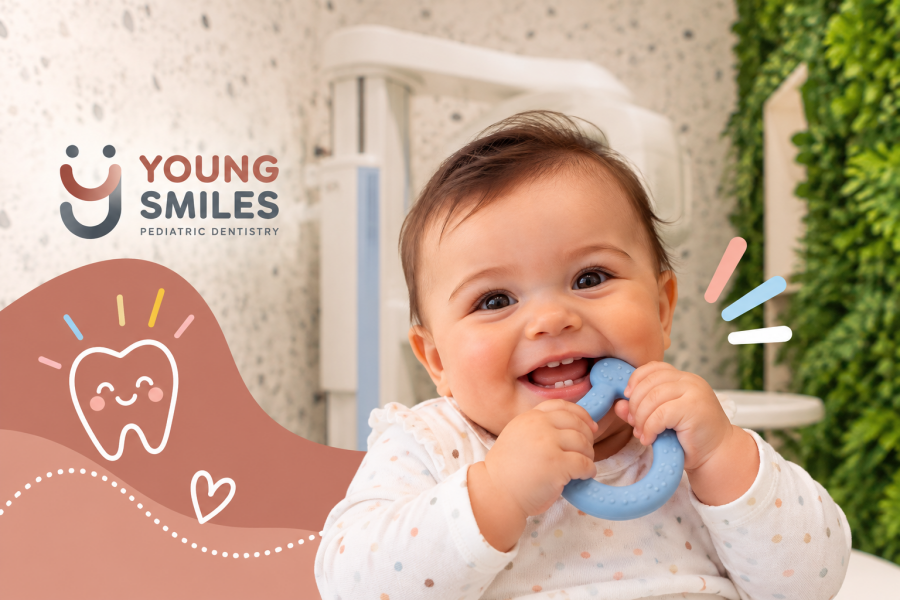
Your Child’s First Dental Visit: What Parents Can Expect
Your child's first trip to the dentist is a milestone, and it's normal for parents to have almost as many questions as their kids.
What will happen during the appointment? What if your child doesn't want to cooperate? What should you tell them beforehand?
A first dental visit isn't about expecting a young child to behave like an experienced dental patient. It's an opportunity to begin monitoring their developing smile, talk with the pediatric dentist about their oral health, and start making dental care a familiar part of growing up.
At Young Smiles Pediatric Dentistry, the practice is designed around caring for children. Knowing a little about what to expect can help parents approach that first appointment with fewer unknowns.
Why Does the First Dental Visit Matter?
Children's mouths begin changing long before they have a complete set of teeth.
As baby teeth emerge and a child's oral hygiene routine develops, parents naturally have questions. A dental visit gives you a place to ask them while allowing the pediatric dentist to evaluate your child's developing smile.
Young Smiles provides cleanings and dental exams for children as part of its preventive dental care.
Early visits can also help make dental appointments part of your child's normal healthcare routine rather than something they encounter for the first time because a tooth hurts.
What Happens at a Child’s First Dental Visit?
The details of a first appointment can vary depending on the child's age and needs.
Young Smiles has a dedicated Child’s First Visit resource for families preparing for their first appointment with the practice.
In general, the visit gives the dental team an opportunity to become familiar with your child, evaluate their oral health, and talk with you about their teeth and dental routine.
It also gives parents time to ask questions.
If something has been worrying you—brushing, a developing tooth, a dental habit, or something you've noticed in your child's mouth—bring it up rather than waiting for the dentist to discover it independently.
What If My Child Is Nervous About the Dentist?
A little uncertainty around a new experience isn't unusual.
Try not to make the dental visit sound frightening before it happens. Detailed warnings about what might hurt or repeated reassurance that there's “nothing to be scared of” can sometimes introduce concerns a child hadn't considered.
Instead, keep the explanation simple and positive. Let your child know they're going to visit the dentist to have their teeth checked and cared for.
Young Smiles emphasizes a child-focused environment and pediatric dental care specifically designed around younger patients.
Why Choose a Pediatric Dentist for a First Visit?
Pediatric dentists focus their training and practice on caring for infants, children, and teenagers.
Dr. Natalie Muir-Young is a board-certified pediatric dentist. Young Smiles' practice information explains that pediatric dentists have additional training focused on the dental needs of children at different stages of development.
For a child's first appointment, that means the dental setting and approach are centered around pediatric patients rather than treating children as smaller versions of adults.
We've intentionally used this article as the primary blog supporting Young Smiles' Why a Pediatric Dentist resource rather than repeatedly linking that page throughout the entire blog library.
What Questions Should Parents Ask at the First Visit?
You don't need a long checklist, but writing down a few questions beforehand can be helpful.
Depending on your child's age, you may want to ask:
- How should we be caring for their teeth at home?
- Is there anything you want us to pay particular attention to?
- How often should our child return for dental visits?
- Are there any concerns with the teeth you're seeing today?
- What preventive care may be appropriate as our child grows?
- What should we do if our child develops a toothache or injures a tooth?
The answers should reflect your child's individual needs and stage of development.
What If My Child Has Special Needs?
Tell the dental office about your child's individual needs before the appointment.
Developmental, functional, emotional, communication, or health needs can affect how a child experiences dental care. Sharing relevant information beforehand gives you an opportunity to discuss the upcoming visit rather than waiting until your child is already in the dental chair.
Young Smiles provides dental care for children with special needs.
Parents who want to prepare for that conversation can also read Special Needs Dentistry: What Parents Can Expect at a Pediatric Dental Visit.
How Can Parents Make Dental Care Familiar at Home?
Dental health happens between appointments too.
Helping your child establish a regular oral hygiene routine makes caring for their teeth part of everyday life. As they get older, they can gradually become more involved in taking care of their own smile.
You don't need to turn dental health into a constant lesson. Consistent routines are generally more useful than making every brushing session or snack a major event.
The same principle can apply to dental visits: treat them as a normal part of caring for your child's health.
Your Child’s First Dental Visit in Arlington, VA
A first dental visit doesn't need to be something your family dreads.
It is an opportunity for your child to become familiar with dental care and for you to begin an ongoing conversation with a pediatric dentist about their developing smile.
At Young Smiles Pediatric Dentistry in Arlington, Virginia, Dr. Natalie Muir-Young provides pediatric dental care for children of different ages and health conditions in a warm, child-focused environment.
When you're ready to schedule your child's first appointment, book a visit online or call 703-214-5585.