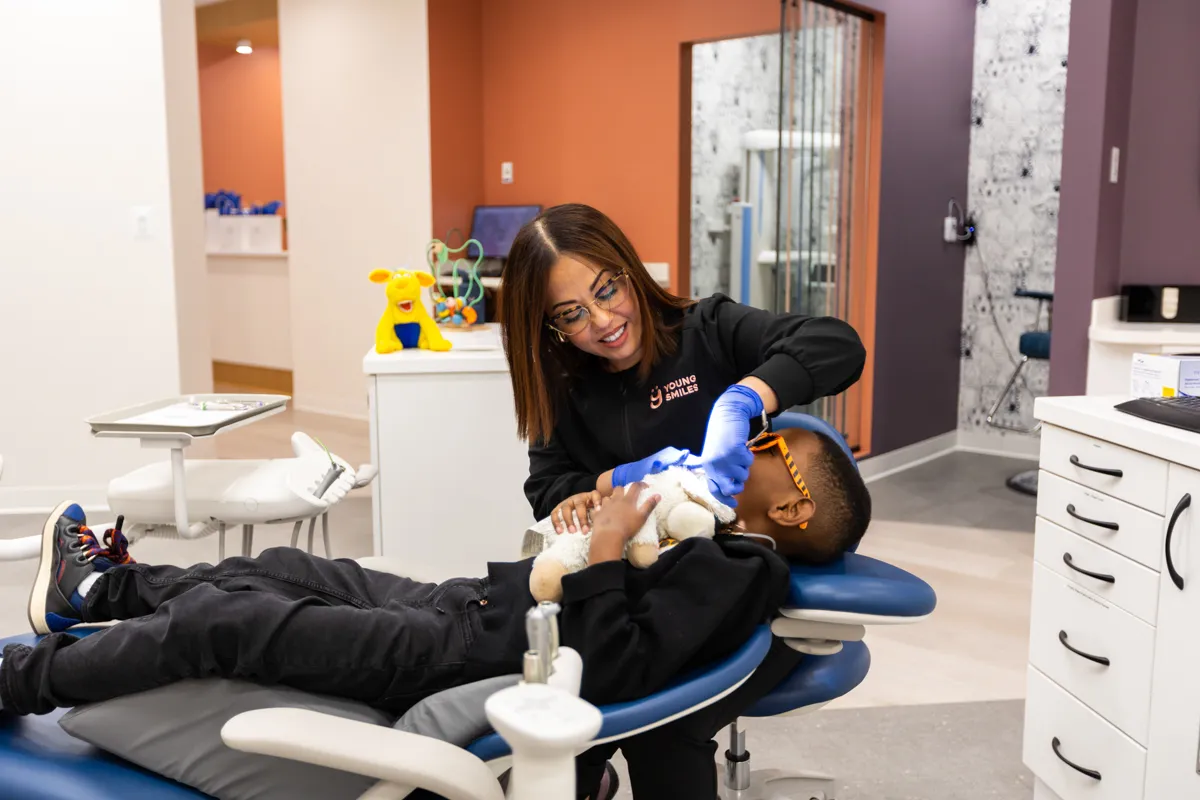
A dental appointment can involve a lot of unfamiliar experiences for a child. There are new people, bright lights, unfamiliar sounds, and someone asking them to sit still while examining their teeth.
For children with autism, developmental disabilities, sensory sensitivities, or certain medical conditions, these experiences can make dental visits particularly challenging.
Parents often know exactly what might cause discomfort, what helps their child feel secure, and how their child communicates when something is wrong. But finding a dental office that understands these individual needs is another part of the process.
At Young Smiles Pediatric Dentistry in Arlington, VA, Dr. Natalie Muir-Young provides dental care for children with different abilities and healthcare needs. Her background includes specialized experience treating children with special needs, and the practice works with parents to understand each child's circumstances.
If you're preparing for an upcoming dental appointment, here are some practical ways to make the experience more manageable for your child.
Why Can Dental Visits Be Difficult for Children With Special Needs?
There isn't one reason why a child might struggle with dental appointments. Often, several factors come together.
Understanding what makes the experience difficult can help parents and dental professionals prepare for the visit.
Sensory Sensitivities
A dental office has several sensory elements that some children find overwhelming.
These may include:
- Bright overhead lights
- The sound of suction equipment and dental instruments
- Vibrations during dental cleanings
- The taste or texture of toothpaste
- Water and unfamiliar sensations inside the mouth
- Having someone stand close or touch their face
A child with sensory sensitivities may react strongly to experiences that other children barely notice.
For example, the sound of a dental suction device might be more upsetting than the cleaning itself. Knowing this ahead of time can help parents explain what their child may encounter and discuss possible accommodations with the dental team.
Communication Differences
Some children have difficulty explaining pain, discomfort, or anxiety.
Others understand what's happening but need more time to process instructions or respond to questions.
This can make routine dental procedures more challenging if the dental team doesn't know how the child communicates.
Parents can help by explaining their child's communication preferences before the appointment. Even small details, such as recognizing a particular gesture or knowing how a child signals discomfort, can be useful.
Changes in Routine
Children who depend on predictable schedules may find unfamiliar appointments difficult.
A dental visit introduces a different environment, different people, and activities that may not be part of their usual routine.
Preparing a child for these changes can make the appointment feel less unexpected.
Physical or Developmental Considerations
Some children have mobility limitations, developmental delays, or medical conditions that affect how they participate in dental treatment.
These circumstances may require additional planning, positioning considerations, or other accommodations.
The dental team should know about these needs before treatment begins.
How Can You Prepare Your Child for a Dental Appointment?
Preparation doesn't have to be complicated. The most useful approach is to focus on what your child already responds to and share that information with the dental team.
Here are several ways to get started.
1. Explain What Will Happen Before the Appointment
If your child responds well to verbal explanations, describe the appointment using simple, familiar language.
You might explain that the dentist will look at their teeth, count them, and check their smile.
Avoid giving too much information at once. A short explanation may be more helpful than a lengthy description of every step.
For children who benefit from visual communication, consider using pictures or a social story showing what happens during a dental visit.
Some children benefit from hearing about an appointment several days in advance. Others may become anxious when they know too early.
Use your knowledge of your child's behavior to decide when to begin preparing them.
2. Share Sensory Triggers With the Dental Office
Before the appointment, tell the dental team about sounds, lights, textures, or physical sensations your child finds uncomfortable.
For example:
- Does your child cover their ears around loud noises?
- Are they uncomfortable with bright lights?
- Do they dislike having their face or mouth touched?
- Are certain flavors or textures difficult for them?
- Do they need additional time to adjust to unfamiliar surroundings?
These details help the dental team understand what might make the appointment difficult.
You can also ask which accommodations may be possible during your child's visit.
3. Bring a Familiar Comfort Item
A familiar object may help some children feel more secure in a new environment.
This could be a favorite stuffed animal, small blanket, toy, or another item your child regularly uses for comfort.
If your child has a particular item that helps during medical appointments, ask the dental office whether it can be brought into the treatment area.
4. Explain How Your Child Communicates
Not every child communicates discomfort in the same way.
Some use spoken language, while others rely on gestures, facial expressions, communication devices, or other methods.
Let the dental team know how your child communicates:
- When something hurts
- When they need a break
- When they're becoming overwhelmed
- When they don't understand an instruction
Parents can often recognize these signals before anyone else.
Sharing them can help the dental team respond more appropriately during the appointment.
5. Provide Relevant Medical Information
A child's medical history is an important part of dental treatment planning.
Before the appointment, share information about:
- Medical diagnoses
- Current medications
- Known allergies
- Previous surgeries or hospitalizations
- Relevant medical precautions
- Previous experiences with dental treatment
If your child has difficulty remaining in a dental chair or has experienced challenges during other medical procedures, mention that as well.
The more the dentist knows about your child's health and previous experiences, the better they can evaluate appropriate treatment options.
6. Ask Questions Before the Appointment
You don't need to wait until you're sitting in the dental office to discuss your concerns.
When scheduling, explain that your child has additional needs and ask how the practice approaches appointments for children who may require accommodations.
You might ask:
- Can I explain my child's sensory sensitivities before the visit?
- Can I share information about my child's communication needs?
- What happens if my child becomes overwhelmed during an examination?
- How does the dentist approach children who have difficulty completing dental treatment?
- What options are available if my child cannot safely tolerate treatment while awake?
These conversations help you understand what to expect and give the dental team an opportunity to prepare.
What If Your Child Cannot Complete a Dental Appointment?
Sometimes, preparation and additional support aren't enough to make traditional dental treatment possible.
A child may have significant developmental delays, severe dental anxiety, difficulty remaining still, or other circumstances that make certain procedures difficult to complete safely.
This doesn't mean your child cannot receive dental care.
It means the dentist may need to evaluate a different approach.
Depending on the child's circumstances, treatment planning may involve additional behavioral support, adjustments to the appointment, or a discussion about sedation and general anesthesia.
When Might General Anesthesia Be Considered?
General anesthesia may be an option for children who cannot safely or comfortably receive necessary dental treatment while awake.
At Young Smiles Pediatric Dentistry, outpatient general anesthesia is available at a surgical center near the Arlington office.
A trained anesthesia provider administers and monitors the anesthesia while Dr. Muir-Young performs the necessary dental treatment.
General anesthesia may be considered for children with autism, cerebral palsy, Down syndrome, developmental delays, or other special healthcare needs when those conditions affect their ability to participate safely in dental procedures.
However, a diagnosis alone does not determine whether general anesthesia is appropriate.
The dentist must evaluate the child's medical history, dental treatment needs, and ability to tolerate other approaches before making a recommendation.
Parents should discuss the potential benefits, risks, and alternatives with the treating dental and anesthesia providers.
You can learn more about outpatient general anesthesia dentistry at Young Smiles.
What Should You Look for in a Special Needs Pediatric Dentist in Arlington?
Choosing a pediatric dentist for a child with additional healthcare needs involves more than finding an office that treats children.
You want a dental team that is willing to understand your child's individual circumstances and communicate openly with your family.
Here are some things worth considering.
Experience with children who have special healthcare needs: Ask about the dentist's background and experience treating children with developmental, physical, or medical differences.
Communication with parents and caregivers: Your observations matter. Look for a practice that encourages you to explain your child's needs and ask questions.
Awareness of sensory and communication differences: Ask how the dental team approaches children who may struggle with unfamiliar sounds, physical sensations, or verbal instructions.
Accessibility and mobility considerations: If your child uses mobility equipment or needs assistance getting into the treatment area, ask about available accommodations.
Appropriate treatment options: Some children may need additional support to complete dental procedures. Ask how the dentist evaluates treatment options when a routine appointment isn't sufficient.
These conversations can help you decide whether a dental practice is a good fit for your family.
Special Needs Dentistry at Young Smiles Pediatric Dentistry in Arlington, VA
Finding the right dentist can be a significant concern for parents of children with special healthcare needs.
Dr. Natalie Muir-Young, a board-certified pediatric dentist at Young Smiles Pediatric Dentistry, has a background in treating children with special needs.
She completed a two-year General Practice Residency at Bronx Lebanon Hospital, where she served as chief resident and focused on oral surgery techniques and treating children with special needs.
At Young Smiles, dental care may include routine cleanings and examinations, fillings, extractions, and other necessary procedures. The team also considers communication differences, sensory sensitivities, and mobility needs when planning care.
For children who cannot safely complete necessary dental treatment while awake, outpatient general anesthesia may be discussed as an additional option following an individual evaluation.
Young Smiles serves families looking for special needs pediatric dentistry in Arlington, Virginia.
If your child needs additional support during dental appointments, you can learn more about special needs dentistry at Young Smiles.
Frequently Asked Questions About Dental Care for Children With Special Needs
Can children with autism visit a regular pediatric dentist?
Yes. Many children with autism receive routine dental care from pediatric dentists. Some may need additional accommodations for sensory sensitivities, communication differences, or difficulty with certain procedures. Parents should explain their child's needs before scheduling so the dental team can discuss an appropriate approach.
How do I prepare a child with sensory sensitivities for the dentist?
Start by identifying the experiences your child finds uncomfortable, such as bright lights, loud noises, unfamiliar textures, or having someone touch their face. Share these details with the dental office and use familiar explanations, pictures, or comfort items if they help your child prepare.
What if my child refuses to open their mouth during a dental examination?
Avoid assuming that your child is simply being difficult. They may be experiencing anxiety, sensory discomfort, or difficulty understanding what is happening. Tell the dentist what you have observed and discuss an appropriate approach. The dentist can evaluate the situation and determine what care may be possible.
Does every child with special needs require general anesthesia for dental treatment?
No. Many children with special healthcare needs can receive routine dental care with appropriate accommodations and support. General anesthesia may be considered when a child cannot safely tolerate necessary treatment through other approaches. The decision requires an individual evaluation.
What medical information should I provide to a pediatric dentist?
Share relevant medical diagnoses, medications, allergies, previous surgeries, medical precautions, and information about previous dental or medical experiences. Also explain your child's communication preferences, sensory sensitivities, and mobility needs.
When should a child with special needs first visit the dentist?
Children should generally have their first dental visit by their first birthday or within six months of their first tooth appearing. Parents of children with special healthcare needs can also discuss earlier dental guidance with their child's healthcare providers, especially when medical or developmental conditions may affect oral health.
Schedule a Consultation at Young Smiles Pediatric Dentistry
Your child may need a different approach to dental care than another child, and that's okay.
The important thing is finding a dental team that takes the time to understand those differences and discuss appropriate options with your family.
If you're looking for special needs dentistry in Arlington, VA, call (703) 214-5585 to discuss your child's needs and schedule an appointment.