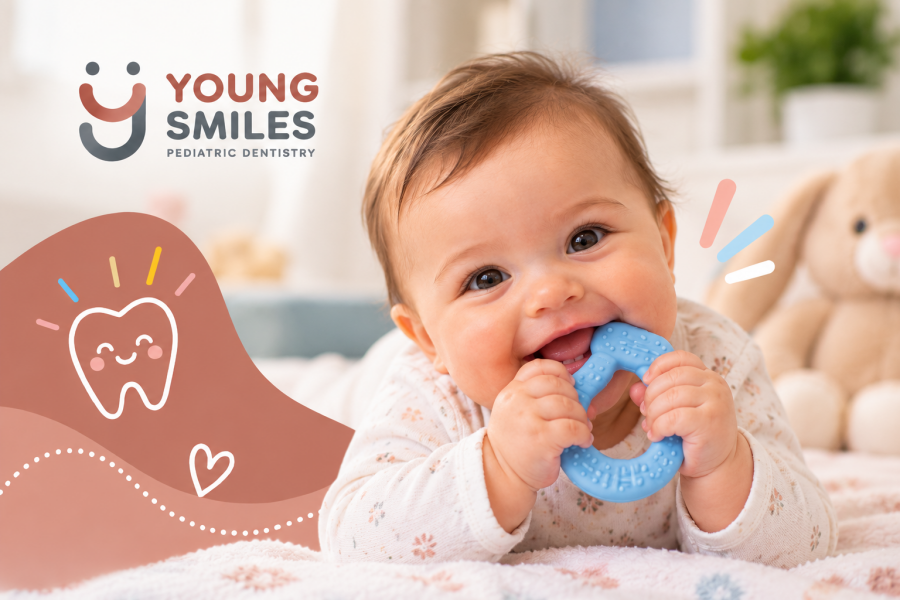
A baby's first tooth is exciting. The days leading up to it can be a little less predictable.
Parents may notice changes in their baby's mouth or behavior and wonder whether teething is responsible. They may also find themselves asking a harder question: Is this something we should expect, or should we call the dentist?
Teething is part of a child's early dental development, but parents don't have to diagnose every change themselves. Understanding what's happening as baby teeth emerge—and knowing when something deserves professional attention—can make this stage easier to navigate.
What Is Teething?
Teething refers to the stage when a baby's primary teeth begin emerging through the gums.
These first teeth are the beginning of a process that continues as more baby teeth appear and, later in childhood, eventually make way for permanent teeth.
Every child's experience can be different. Rather than comparing your baby's exact timing or experience with another child's, pay attention to what is happening in your own child's mouth.
If something doesn't seem right or you're unsure whether a change is related to teething, your pediatric dentist can help.
What Are Common Signs Parents Notice During Teething?
Parents often associate teething with changes around a baby's mouth and an increased desire to chew.
You may also notice that your child seems more aware of their gums as a tooth begins to emerge.
However, it's important not to assume that every symptom occurring during the teething stage is caused by teething.
If your baby seems unwell or has symptoms that concern you, contact the appropriate healthcare provider rather than attributing the problem to an emerging tooth without an evaluation.
How Can I Help My Baby During Teething?
When your baby seems uncomfortable, it's understandable to want an immediate solution.
The safest approach is to keep things simple and be cautious about remedies found online, particularly products or medications that haven't been recommended for your child.
Because Young Smiles' supplied materials don't provide practice-specific teething remedies or medication instructions, parents should ask their child's healthcare provider before using products intended to relieve teething discomfort.
You can also bring questions about teething and developing baby teeth to your child's pediatric dental visits.
When Should I Start Caring for My Baby’s Teeth?
Once baby teeth begin arriving, they become part of your child's daily oral health routine.
These teeth are temporary, but they still have important jobs during childhood. Children eventually use their primary teeth for biting and chewing, and the teeth occupy space as the mouth develops.
Young Smiles explains more about why baby teeth are important and why they deserve appropriate care while they're present.
As more teeth emerge, parents can ask the pediatric dentist for guidance about caring for their child's teeth at home.
When Should My Child Start Seeing a Dentist?
Rather than relying on this article for a practice-specific first-visit timeline, families can use Young Smiles' dedicated Child's First Visit resource for information about beginning care with the practice.
A pediatric dental visit gives parents an opportunity to ask questions about emerging teeth, home care, and changes they're noticing as their child's smile develops.
Once your child begins regular preventive care, dental cleanings and exams also allow the pediatric dentist to monitor their oral health as they grow.
What If a New Baby Tooth Looks Different?
Parents spend a lot of time looking at their baby's new teeth, so it's common to notice details and wonder whether they're normal.
If a tooth looks unusual to you, don't feel that you need to identify the cause yourself.
You can take note of what you're seeing and discuss it with the pediatric dentist. If you're concerned enough that you don't want to wait until the next routine appointment, call the office and explain what you've noticed.
A description of the specific concern is more useful than trying to diagnose the tooth from an online photo or article.
What If My Baby Injures a New Tooth?
Once teeth begin emerging, they can also be affected by falls and other accidents.
If your child injures a tooth or their mouth, contact the dental office for guidance. Young Smiles provides pediatric dental emergency care for concerns including tooth loss, broken teeth, mouth injuries, toothaches, and other urgent dental problems.
If an injury involves potentially life-threatening symptoms, seek emergency medical care.
What Should Parents Ask About Teething and Baby Teeth?
You don't need to memorize everything about dental development before your baby's teeth arrive.
Instead, keep track of questions as they come up. For example:
- Does this change in my baby's mouth look like normal tooth development?
- How should we care for newly emerging teeth?
- Is there anything we should avoid using for teething discomfort?
- When should our child come in for a dental visit?
- What changes should prompt us to call the office?
- What should we do if our baby injures a tooth?
Your pediatric dentist can provide guidance based on your child's actual teeth and stage of development.
Pediatric Dental Care for Growing Smiles in Arlington, VA
Teething is one of the first visible signs that your child's smile is developing.
You don't need to have every stage figured out on your own. As baby teeth emerge, a pediatric dentist can help answer questions about what you're seeing, caring for new teeth, and building an appropriate dental routine.
At Young Smiles Pediatric Dentistry in Arlington, Virginia, Dr. Natalie Muir-Young is a board-certified pediatric dentist providing dental care for children throughout their growing years.
If you have questions about your child's developing smile, book an appointment online or call Young Smiles at 703-214-5585.